
Honoring Tradition
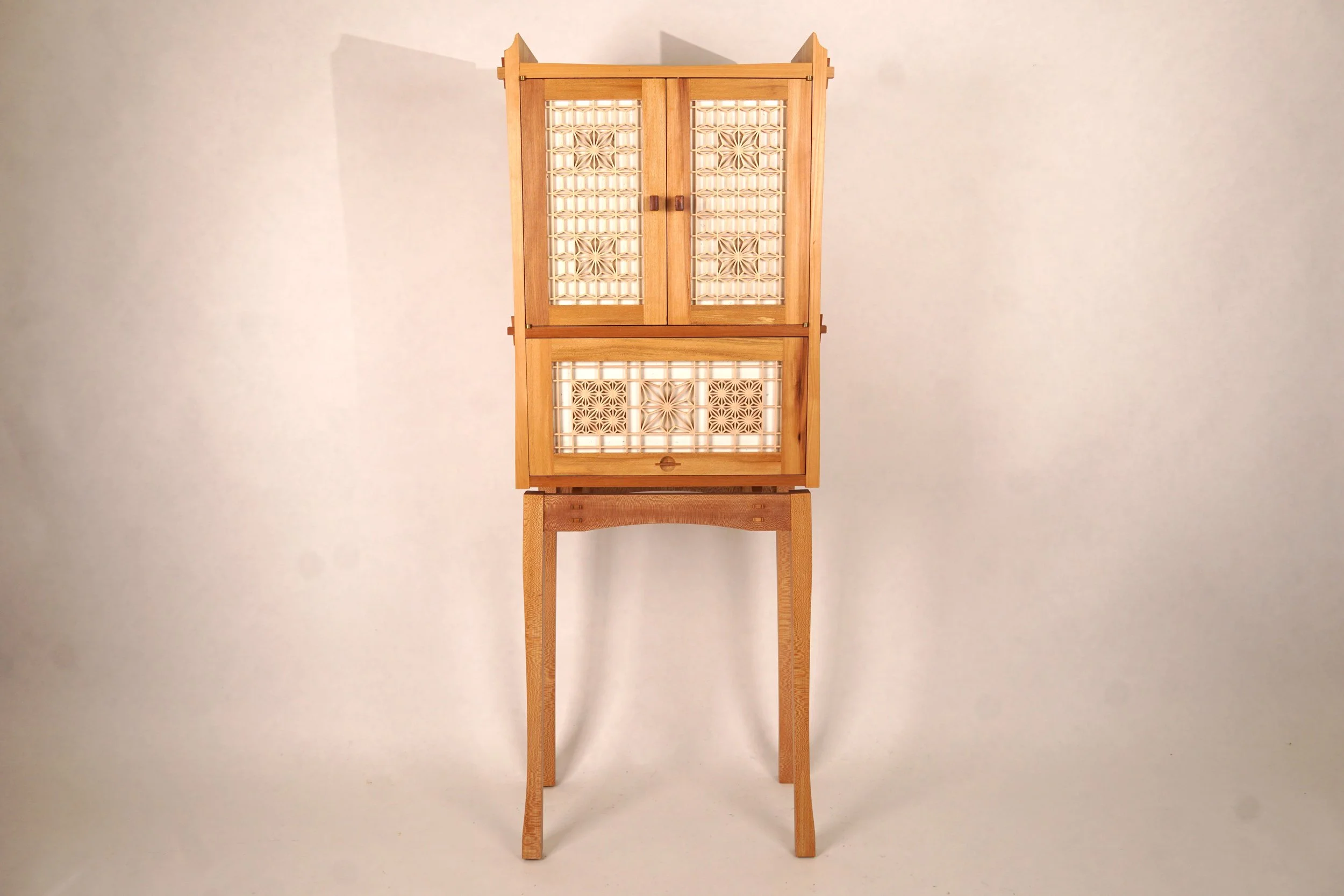
A butsudan is a shrine or altar commonly found in Japanese Buddhist homes. Its purpose is to pay respect to ancestors and/or the Buddha.
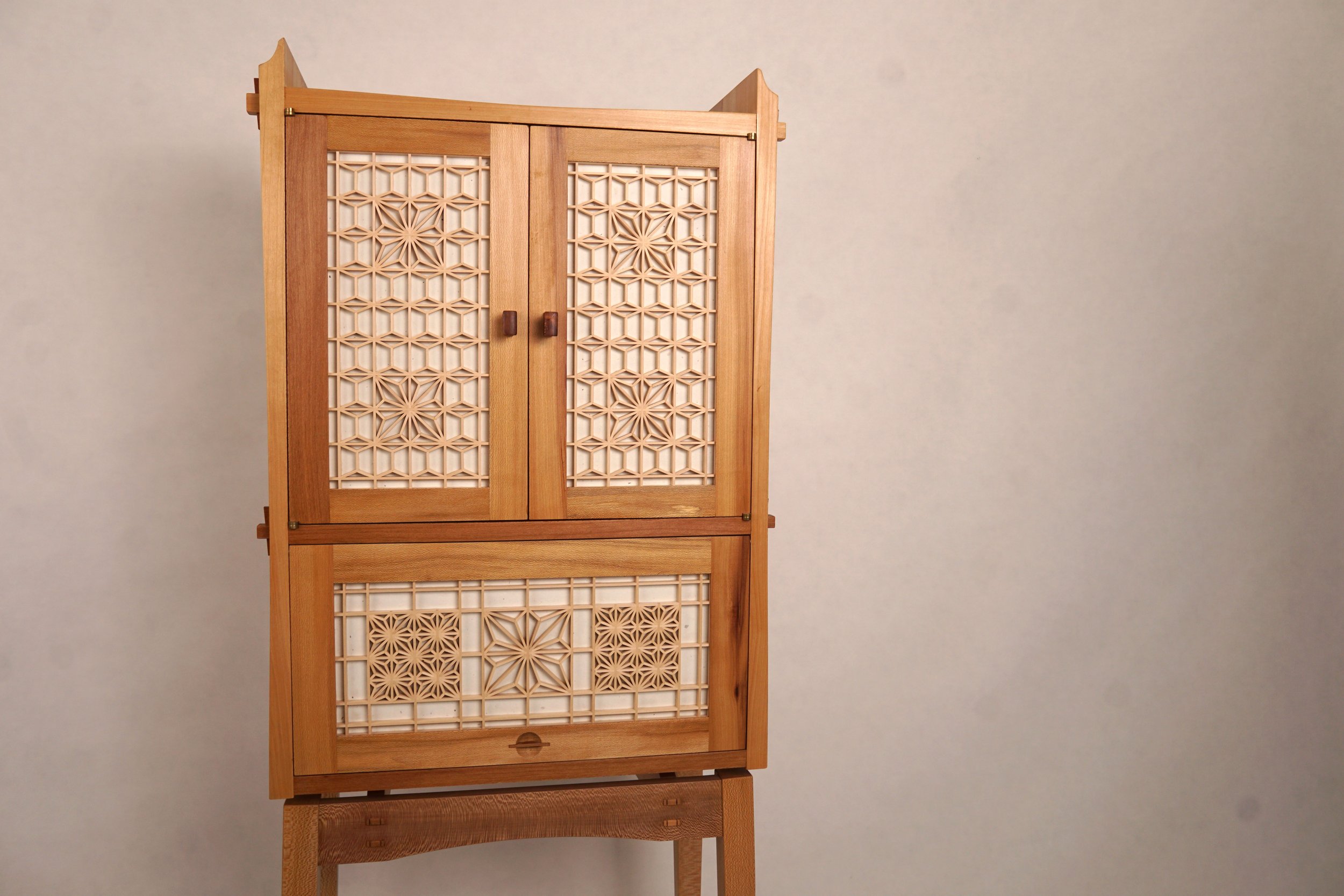
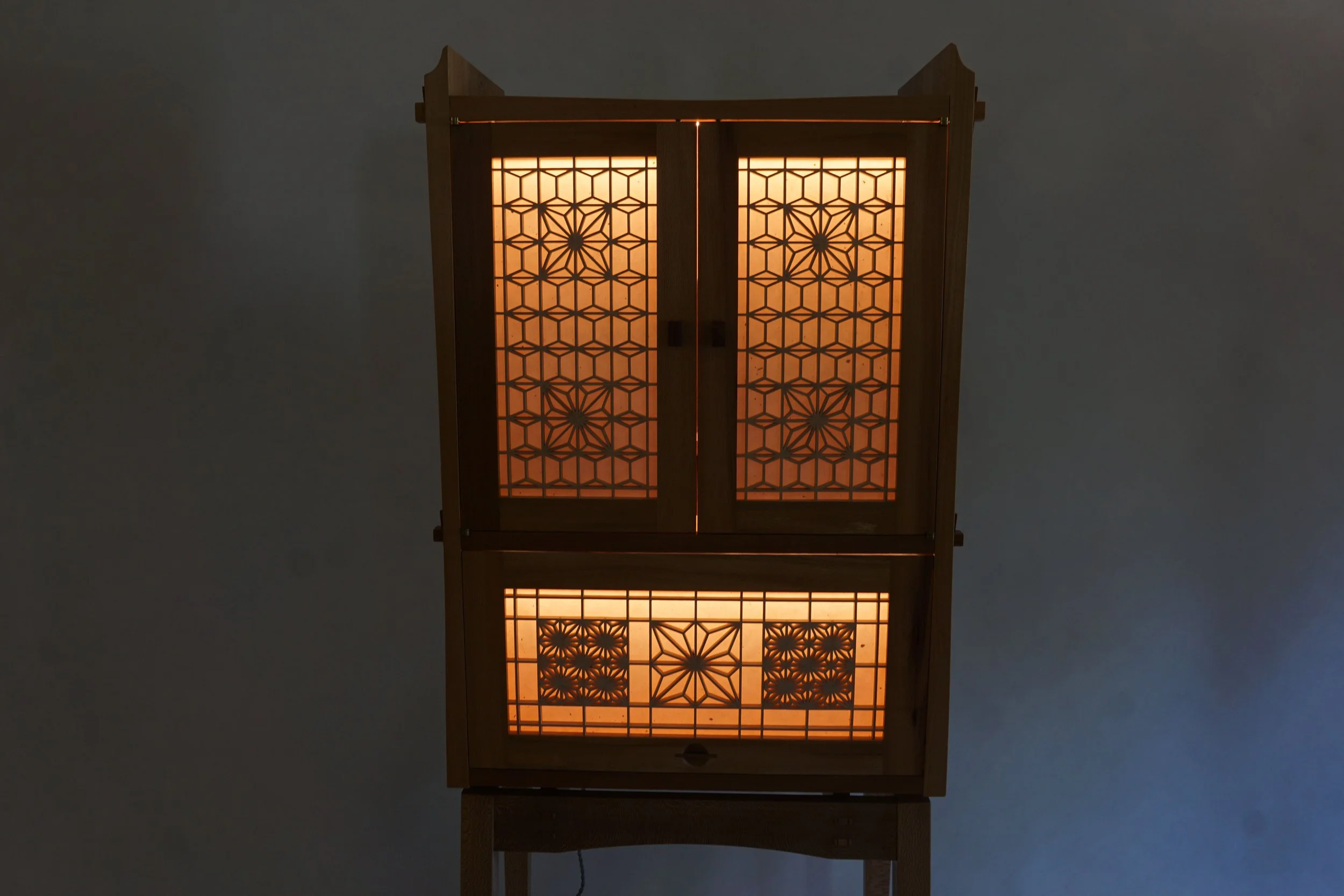
The butsudan was commissioned by a Japanese American client looking to keep alive family traditions rooted in Buddhism. The client was looking for a modern interpretation of a butsudan that would honor her mother when she passed away. The project required me to take a deep dive into a tradition I knew nothing about. A family friend had gotten the process started through the gift of a wooden box. Her mother fell in love with the box and decided it would one day be the urn for her ashes. The client, not a practicing Buddhist, was not sure how the tradition would look once a butsudan was in her house. In the design I worked to make sure the necessary traditional elements were present, and it could also function as a display cabinet.
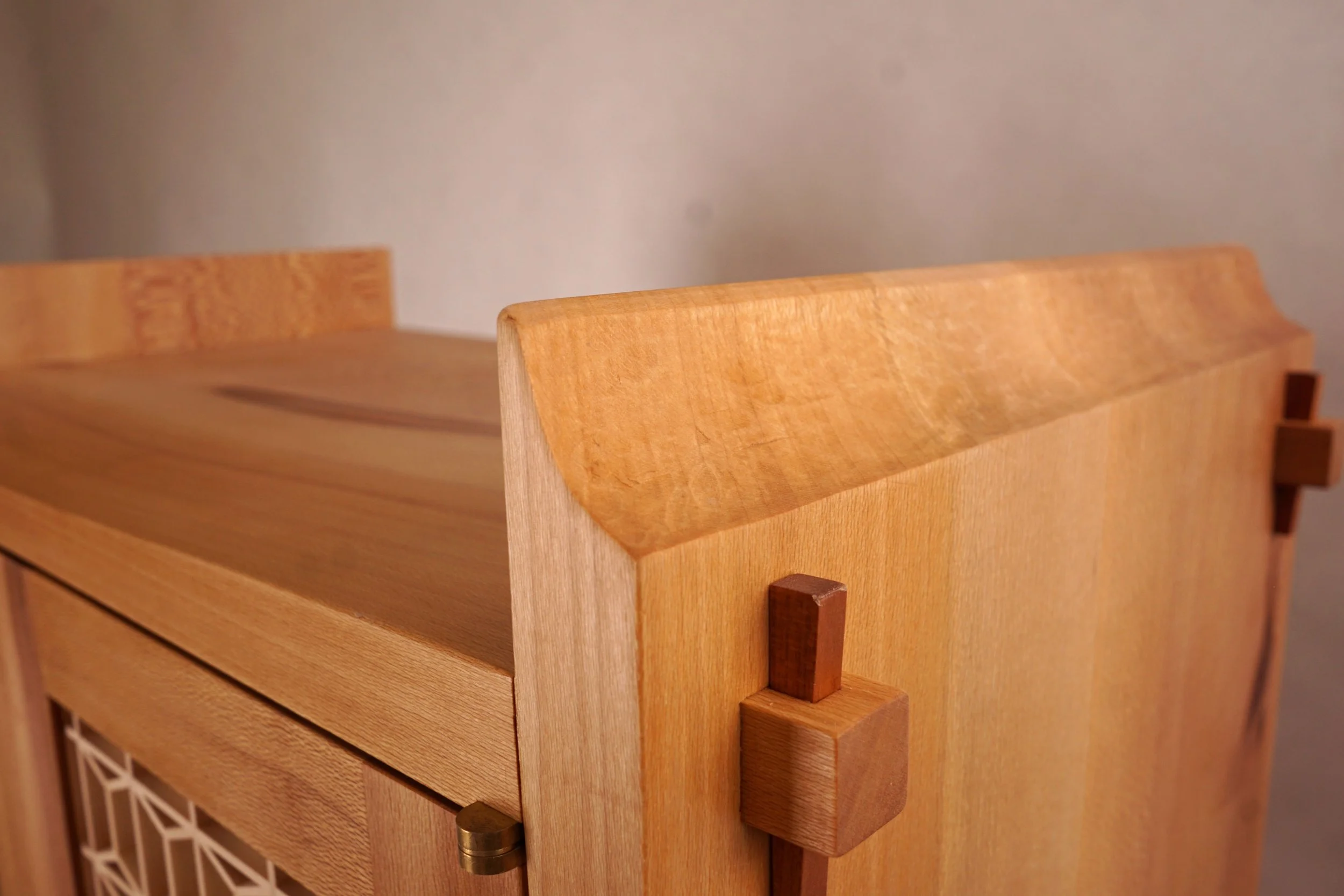
We decided the urn would have its own section in the cabinet. The primary wood for the urn was sycamore. I had always been interested in working with sycamore, so I set off to find some. The other detail the client mentioned for inspiration was a torii gate, a traditional Japanese architectural structure which marks the transition from the everyday world to a sacred space. From the form of the torii gate I was inspired to add a curve in the top and the sides of the cabinet. I brought the sides up past the top as a play on the elements of the torii gate.
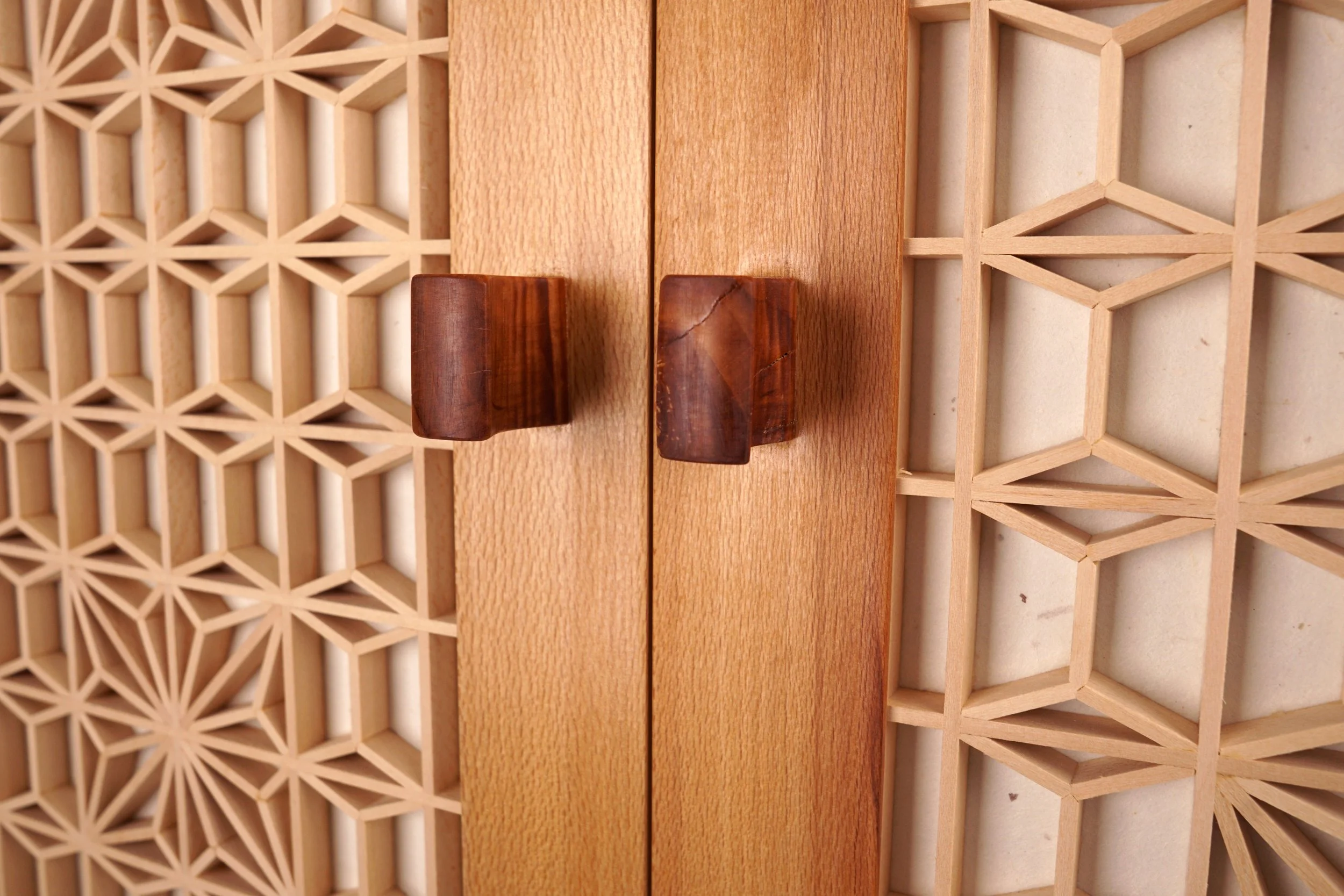
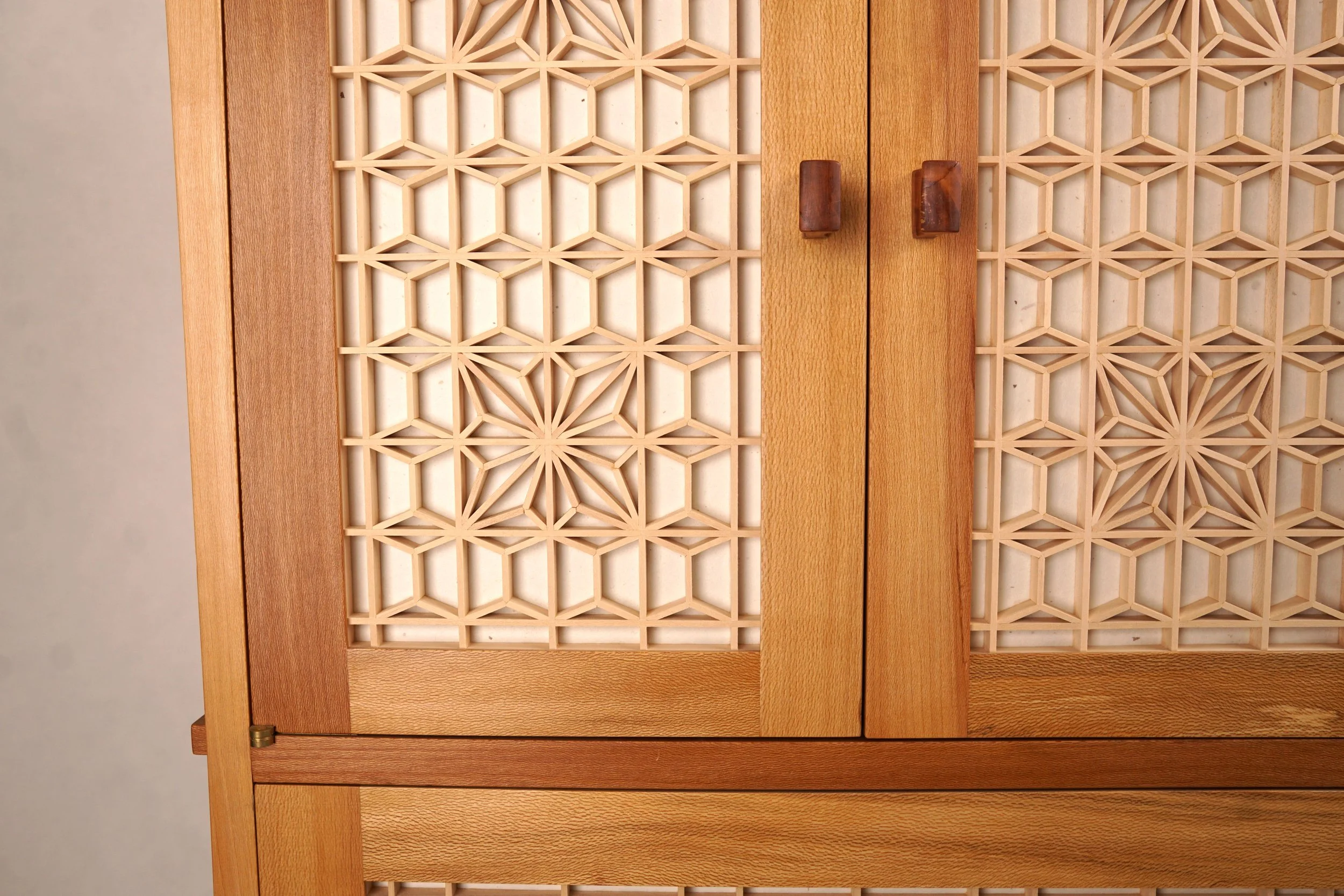
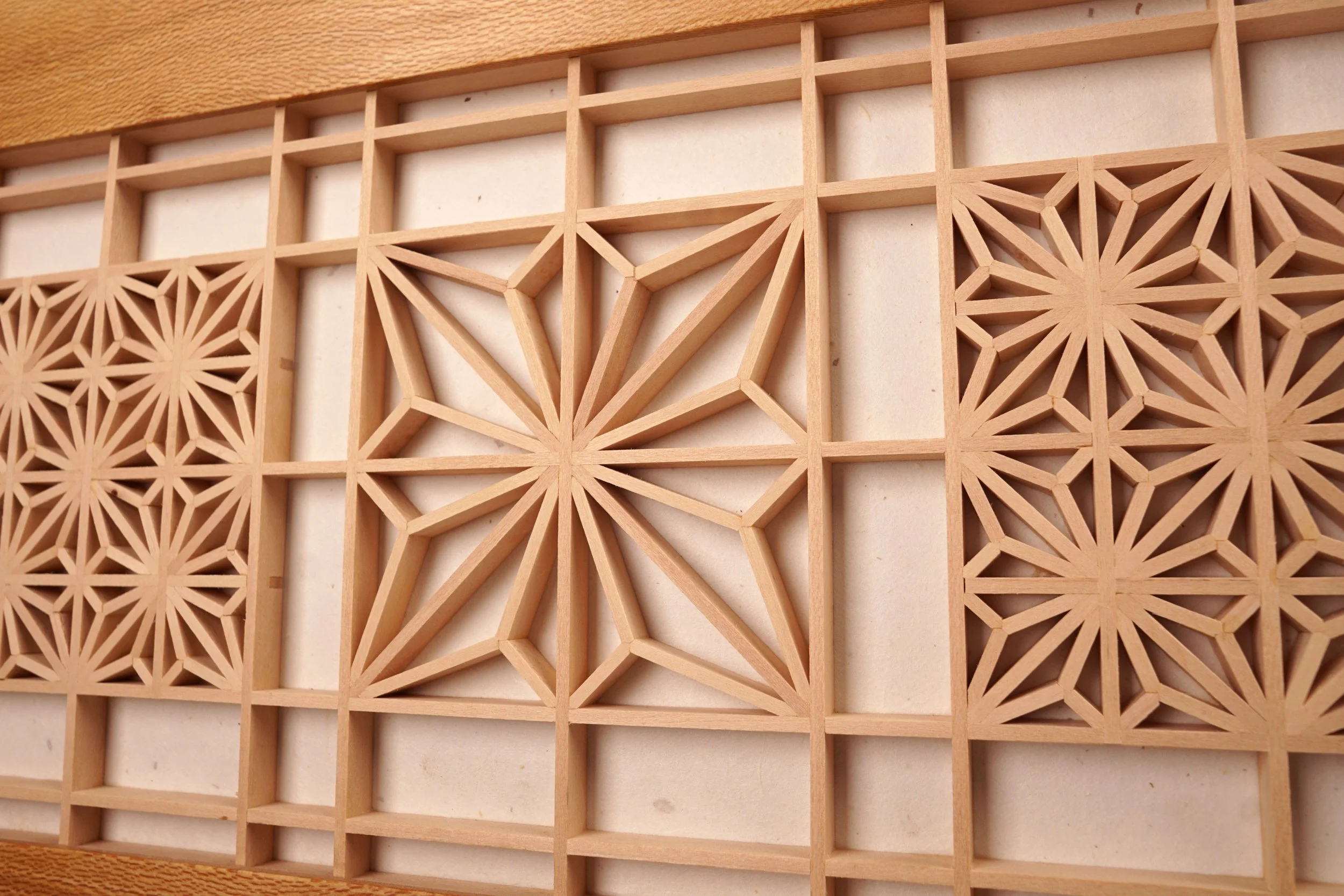
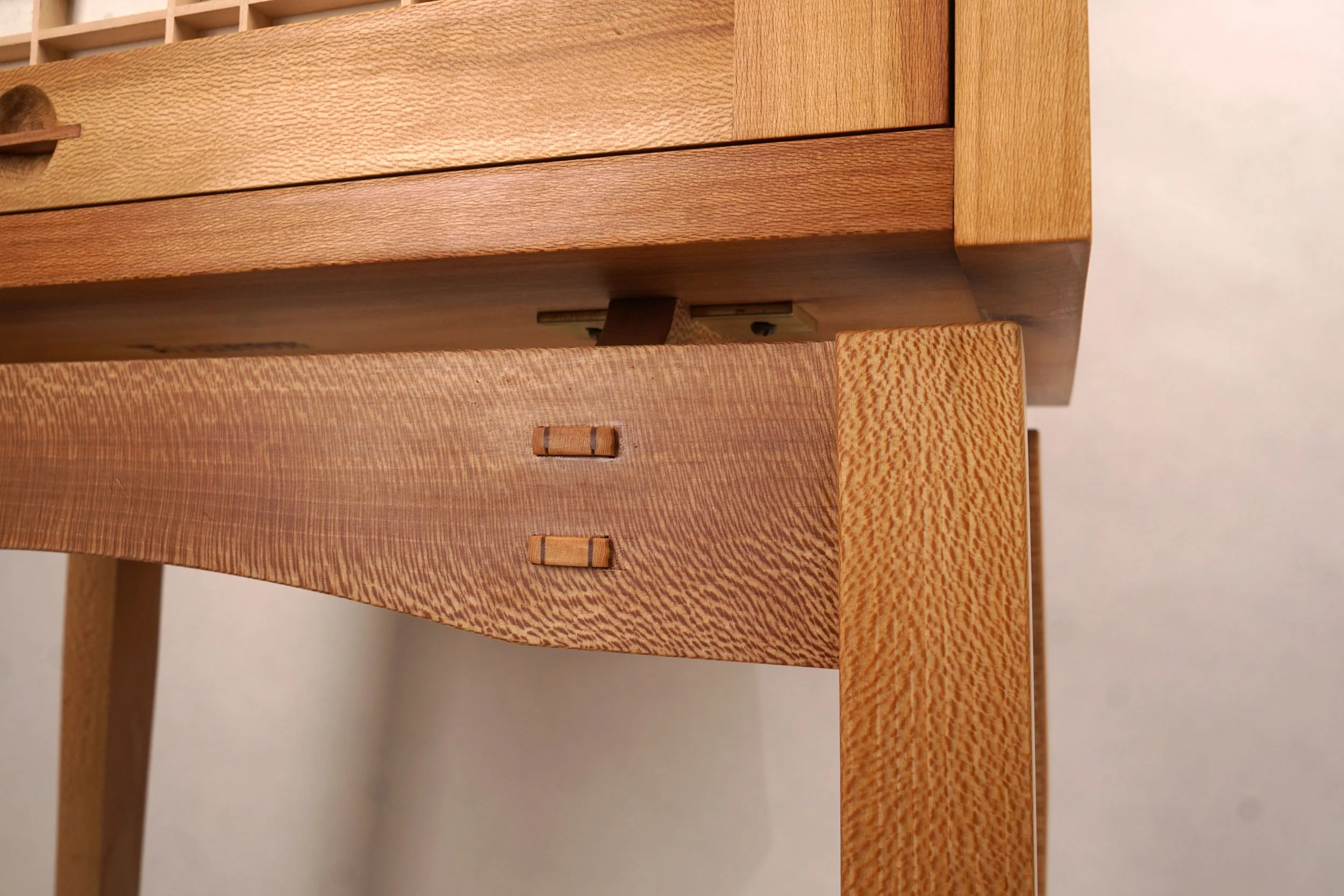
There are many aspects of Japanese woodworking that influence my work and this project lent itself to showing some of those off and some further exploration. I had not tried Kumiko, the assembled wooden pieces pressure fit together that make up the door panels. Kumiko is traditionally used in creating shoji doors or screens. In this butsudan they also mimic a Japanese Andon lantern, when the internal lights are turned on. The joinery is exposed on the sides of the carcass and in the stand, in wedged and through tenons.
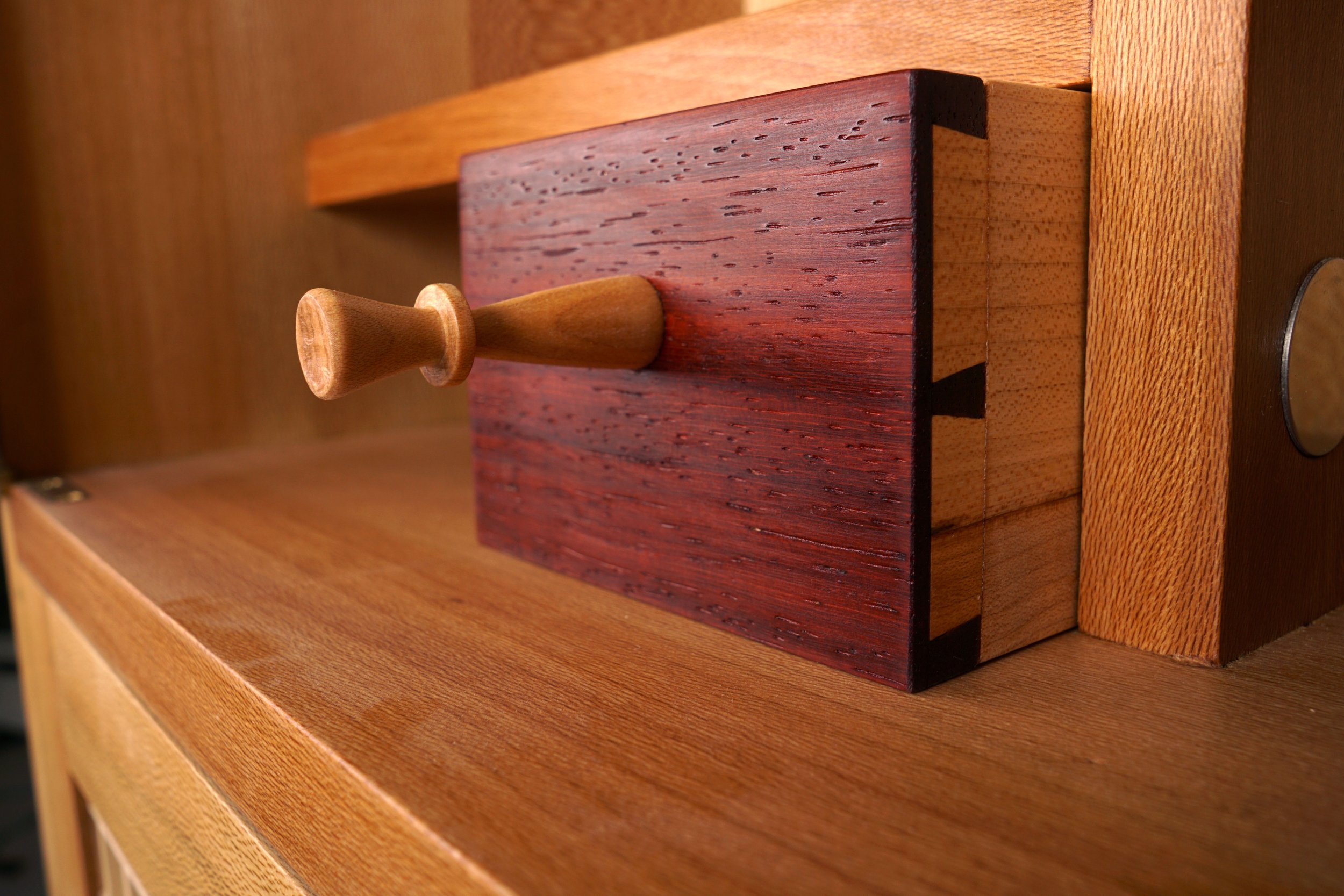
The carcass is quarter sawn sycamore. Many of the small details such as the wedges and door pulls were made from a chunk of apple wood. The drawer front is a piece of bubinga. The butsudan is finished with a wiping varnish.
This cabinet received a Commended Award in the Furniture category for the Maker of the Year Awards 2025.